TJ Barczak
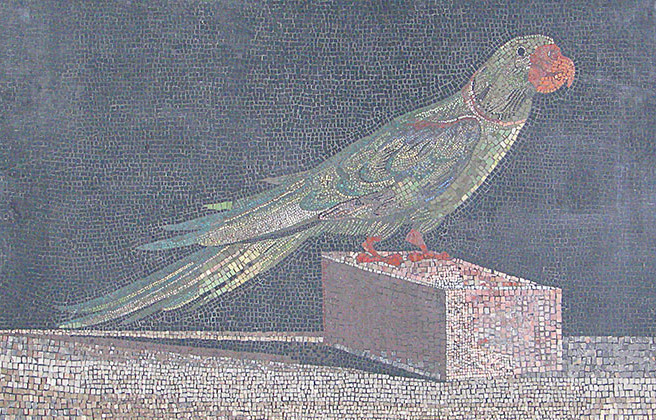
Parrot Pergamon is designed after an Alexandrine parakeet or parrot. This bird’s name comes from Alexander the Great; he created a large empire that stretched across Eurasia from Greece to India. Designed a made-in Pergamon (modern-day Turkey), an artist completed the mosaic around the middle of the second century BC, during the reigns of Eumenes II and Attalus II. This mosaic is from a floor panel in the “altar room” of the Pergamon Acropolis in Palace V; the mosaic was discovered in an excavation led by archaeologists Richard Bohn in 1996, where his team excavated this piece of art along with tons of other mosaics across the acropolis. Today, the Pergamon museum owns and displays it in Berlin, Germany.
A mosaic is a design or image created with small pieces (tesserae-i) of materials to decorate floors, walls, or ceilings. The Parrot Pergamon mosaic was created using opus vermiculatum; this Greek method of artwork made rows of colored stone tesserae, so it imitates color painting. Opus vermiculatum means “worm-like work” and is supposedly one of the hardest and physically demanding styles of mosaic work. Borders were made of darker tesserae to brighten the focus of pieces usually made with more vibrant colors. Mosaics like the Parrot Pergamon only used artistic styles like color and tone to accentuate their subject. Another technique used in the mosaic was emblemata. This method was easily transportable; master artists could make a more detailed section of tiles to send out to the acropolis, where tiles can be placed into the more basic background and then touched up and fixed by assistants. Here is a short video to learn more about this style of music building: https://www.youtube.com/watch?v=u0rDj-hOViM
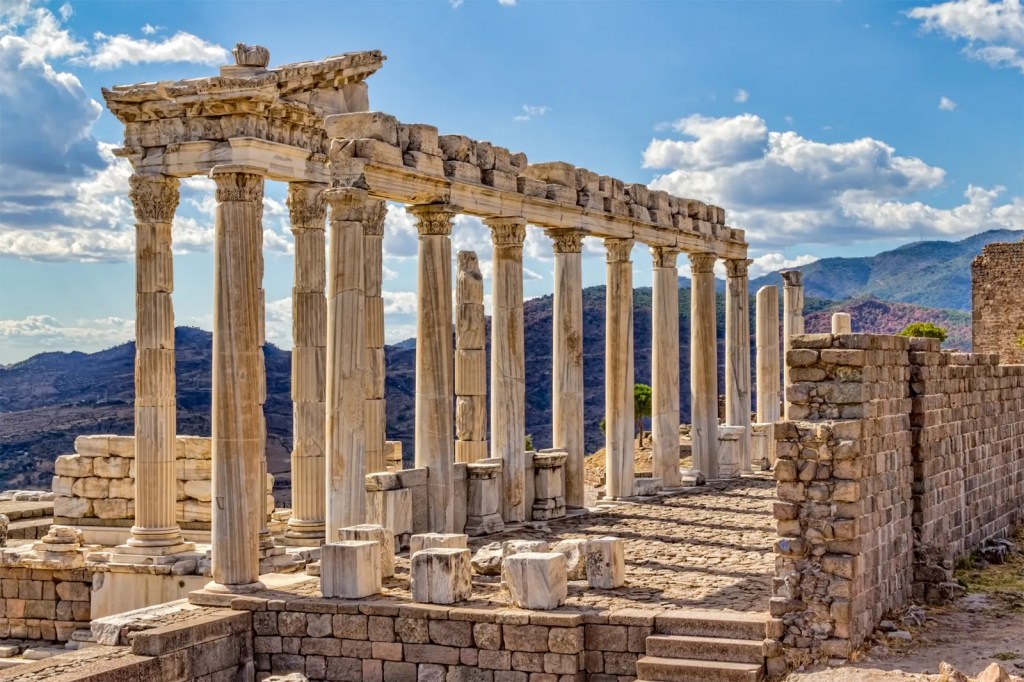
The city of Pergamon in the course of the reigns of both brothers Eumenes II and Attalus II prospered. The Library of Pergamon was established; it rivaled the Library of Alexandria due to its wide array of books. Pergamon became a cultural, political, and scientific center for the Mediterranean world with tons of literature, Greek architecture, and art across the empire. Throughout Pergamon’s vast history, it was a multicultural landscape between the Hellenistic Attalid dynasty and the Roman Empire annexed the city from the Attalids. The parrot mosaic would then have influences coming from Romanic and Hellenistic art styles seeing that both controlled the acropolis.
A detail lost to history about this mosaic is its author. There is no historical record of mosaic artists that created anything in the Pergamon Acropolis. The only piece of literature that mentions an artist was by Pliny the Elder, which wrote of Sosos, an artist who resides in Pergamon.
Moving back to the main subject of the Parrot Pergamon, the Alexandrine parakeet is a medium-sized parrot that Alexander the Great transported across the world. These birds went from the Punjab region in India to many regions of Europe and the Mediterranean coast. These birds were cherished by royals and nobility whenever and wherever the birds were received. The parrot in the mosaic also resembles the Alexandrine parakeet’s close relative, the rose-ringed parakeet, because of the bright red or rose ring around the neck of the bird.

Overall the research on the Parrot of Pergamon, conclusions can be made from the unknown details. All the techniques used in making the mosaic were kept through history but the lack of documentation on the artist leaves a tremendous detail out of the picture. But, both the city and the mosaic were specific examples of cultural syncretism between the Romans and the Greeks in their separate reigns of the city of Pergamon.
Works Cited:
 MOSAIC PROJECT 23