Matthias Pridgeon
The mosaic located in the once Roman city of Ostia Antica depicts many mythological associated with the ocean and the industries connected to it. The figures and creatures, and even buildings and vehicles, all represent various specific aspects of the ocean and associated items. The massive mural is an impressively detailed and varied piece which provides a snapshot of the time’s culture and values.
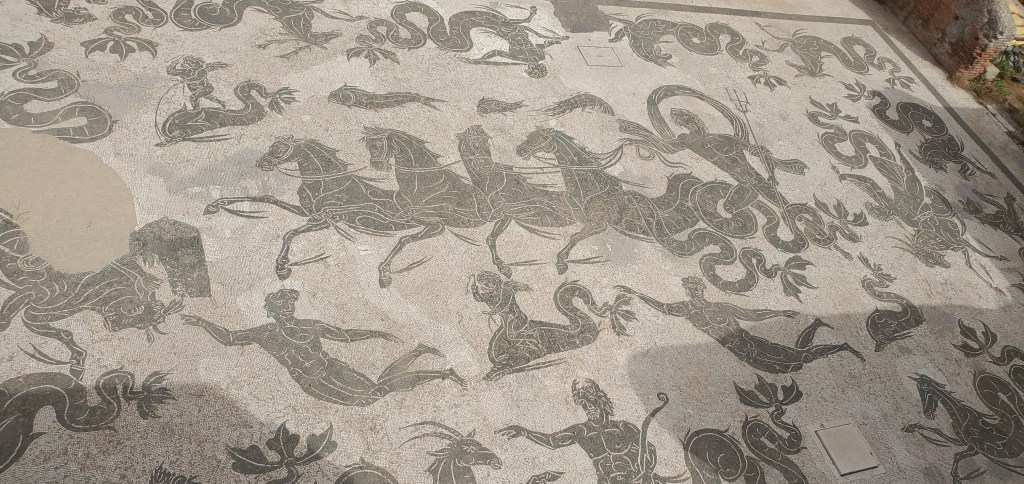
This specific piece is the impressive height of Ostia Antica’s unique artistic style and theming. This style was defined by very small tiles of black and white, which were arranged in very elaborate and creative ways. Though this style may sound limited, the mural above is a superlative example of the incredible intricacies this style could produce. Though the creator, or creators, of this preeminent mural remains anonymous, their great skill is apparent when comparing it to the other murals contemporary in location and time, such as the one below.
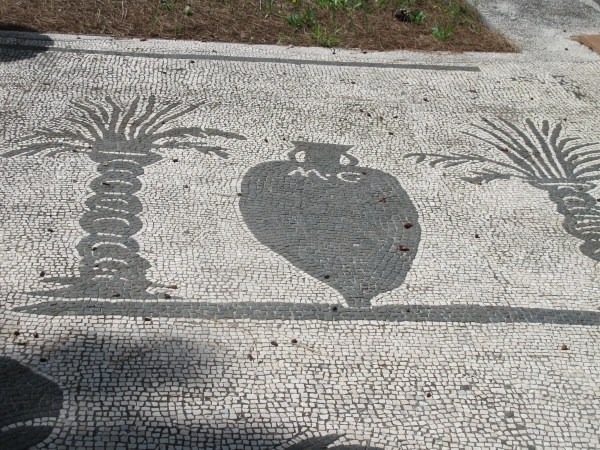
Though the black and white materials may seem limiting to the modern viewer, they were very important for creating a cohesive style between the many, many, murals of the city. Additionally, the small size of the tiles allowed for a surprising amount of detail, far more than many other, larger tiled pieces found in other areas.
The style was important for use in definition by the common citizen of Ostia Antica, as the murals were often utilized as shop signs or public signifiers. This style was used ubiquitously by merchants and officials within the city, and so assisted with clarity, as well as providing merchants with a simple medium to express their shops’ purchase. Even if one was not incredibly talented, with colors or intricate designs spread across large tiles, they small tiles were easy to arrange in basic shapes, without needing to etch or draw designs, and the limited color gradient eliminated the need for knowledge of colors.
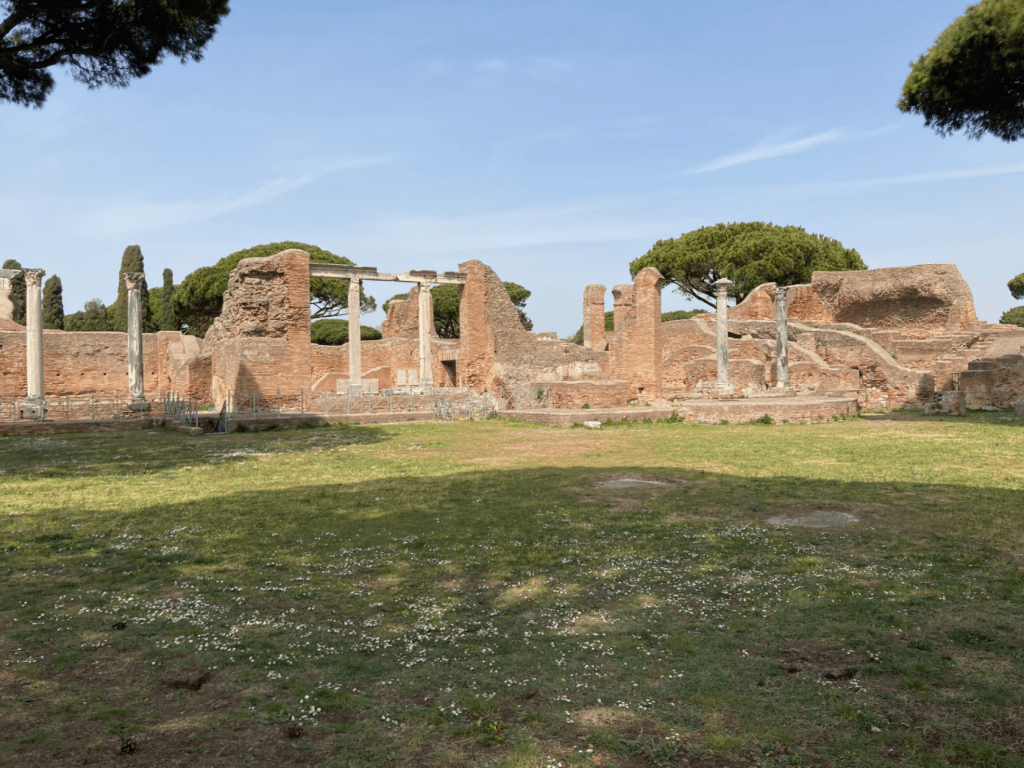
Other mosaics were used to decorate public amenities, such as bath houses or restrooms. Often, they were crafted along the floor of the buildings, especially around the doorways, which were seen as important places of transition to the Romans, as well as the domain of their two-faced God (literally), Janus. But the most highly detailed and captivating were placed at the bottom of pools, especially those which related to the denizens or deities of the sea. The main focus of my project, the first image shown, was placed at the bottom of the central pool of a highly prestigious public area: Neptune’s Bath House.
These public mosaics, more so than those that were utilized by merchants or public officials, were a way of venerating their deities. This is why they so often depicted Gods, demi-Gods, or those they saw as possible champions of the Gods, such as athletic champions. Artistic mediums were an important form of offering, as it preserved the likeness of those worshipped for possible eternity; additionally, it placed important figures in the public eye, as they were placed in areas of frequent traffic.
As Ostia Antica was a port city, the mosaics often revolved around nautical affairs, and focused on respecting maritime creatures and gods. The cosmopolitan nature of trading ports also brought cultural exchange, which is reflected in the mosaics. Though the gods were usually consistent, as it was sacrilegious to deviate, creatures were more variable. Creatures based in non-Roman myths, or even freshly generated in the human imagination, were included in these mosaics.
To capture these fascinating creatures, I will be using paint as my primary medium. The black and white paint, done over pencil sketches, will allow for the intricate line and shape detailing which defines this mosaic. As a base for my recreation, I will be using thin foamboard, such as that used in some tri-fold poster boards. This material will allow me to score lines, roughly half an inch apart, to create a tiled effect without destroying the aforementioned line work. Also, this material will prevent the extra labor of re-glueing the cut pieces to a backing, as I should be able to cut only partially through, and so maintain a solid form.
The mosaics of Ostia Antica, defined by their small tiled and di-colored style, were used as both functional utilitarian designators and artistic demonstrations of faith in the gods; through them, much about the cosmopolitan and maritime culture is revealed. Learn more about the extreme variety of subject matter within other Ostia Antican mosaics here: https://spanishstepsapartment.wordpress.com/2018/06/30/ostia-anticas-black-and-white-mosaics/.
Works Cited:
-https://johnsusansexcellentadventure.com/
-https://gallivance.net/2014/01/20/mules-gods-and-ad-men-ostia-anticas-mosaics/
-https://spanishstepsapartment.wordpress.com/2018/06/30/ostia-anticas-black-and-white-mosaics/
-https://www.sciencephoto.com/media/185868/view/roman-mosaic-ostia-antica
 MOSAIC PROJECT 23