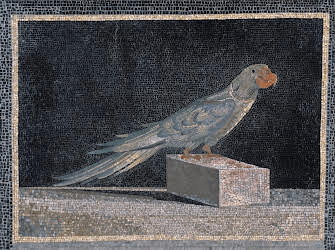
The exact date of the Parrot Pergamon although unknown is predicted to have been made sometime from the early to mid-2nd century BCE. It was originally a floor mosaic in the last royal palace built in Pergamon. It was a part of a larger floor mosaic but was removed during ancient times. After its removal, the mosaic was very damaged so they made a new copy to be displayed in a museum. The only remnants of the original are a piece of the bird’s neck and some tail feathers.
The creator of the mosaic is unknown. This is a common theme in all of the art in the Pergamene acropolis as it was mysteriously constructed with few historical records. However, we do know the temple itself was constructed by King Eumenes I. It was constructed in Pergamon which is where modern-day Bergama is located. The mosaic is now located in Berlin along with the rest of the temple.
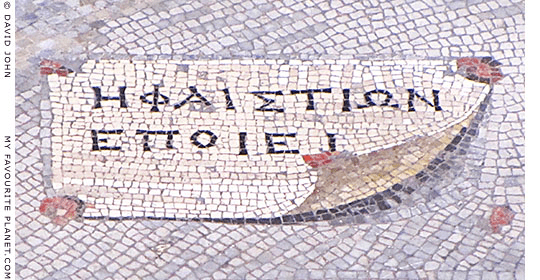
Despite not knowing the exact artist, in the same building where the Parrot mosaic was kept, there was a fragment of the central panel that is a piece of paper with a signature on it that reads, “Hephaistion”. Although most of it was destroyed the remains are still kept in a museum in Berlin.
Although the artist is unknown we do know why the artist made the mosaic of the Alexandrine parakeet specifically. The bird is named after Alexander the Great to honor his actions of sending many exotic birds from Punjab to the west. This is most likely why the mosaic was in the palace as the exotic birds were mainly purchased by very wealthy people who would be able to build palaces.
The parrot is considered to be made using the technique known as opus vermiculatum, “worm-like”. This technique originates from Greece and was used in other impactful mosaics such as the one below which is the central emblemata of a floor mosaic in Rome. The way these mosaics are made is by forming rows of colored tesserae. A method used when making these was to make the centerpiece more vibrant by surrounding it with a dark border to enhance the color towards the middle. This allowed for opus vermiculatum mosaics to be much more realistic and closer to paintings than other forms.

These mosaics as I briefly mentioned are called emblematas. What this means is that before being cemented into the site and put into the larger mosaic the artist would craft it and then transport it to the site. This method was very beneficial for the artist as it allowed them to create small pieces at a time without worrying about fixing them in place.
Pergamonian mosaics were overall very innovative and creative. They provide a very different style of mosaic that is very realistic and requires very meticulous craftsmanship. Although we can never truly know the meaning of these pieces of art due to the anonymity of the artists we can still learn from and honor them as the brilliant artistic feats they are.
Interesting video about opus vermiculatum: https://www.youtube.com/watch?v=u0rDj-hOViM
 MOSAIC PROJECT 23