
The Parrot Pergamon was a mosaic made in Greece, around 200 B.C.E. The bird in focus of this mosaic was the Alexandrine parakeet, more scientifically noted as the Psittacula eupatria, which is a colorful avian that is seen from Afghanistan to Southern Asia. It has also been noted that the bird has developed an alien population in Europe, due to their popularity as pets.

As for the mosaic itself, it is currently housed in the Pergamon Museum, a museum dedicated to the keeping of various artifacts found in the city of Pergamon, located in Berlin. The piece was constructed through traditional means of mosaic creation. This methods include the usage of a variety of colorful stones (typically broke into smaller pieces; tesserae), which when found in the right color can allow for versatile usage in artistic depiction. Glass was also a valid and rather conventional means to replace the stones. As for the apparent, contrasting, filled gaps in between these stones, they were made from mortar paste. After the mortar was finished drying, the stones and piece as a whole would be polished for a benevolous finishing look. Though the Parrot Pergamon was of Roman origin, a lot of the traditional techniques of creation were associated with the Greeks.
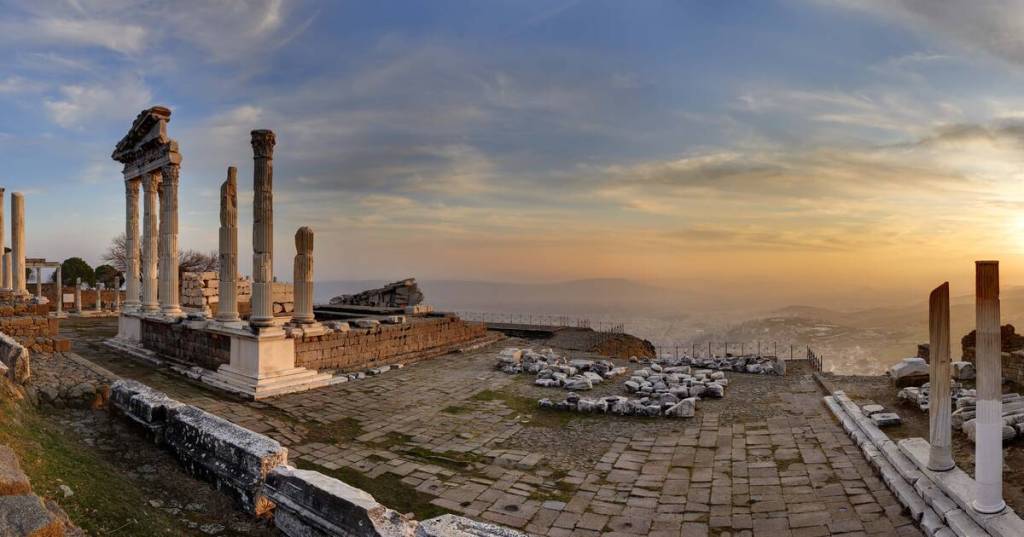
These mosaics, instead of being used purely for art, were often used as flooring for various temples and buildings of high importance – such as temples and that of royalty for this particular mosaic. This is known due to the discovery of the Parrot Pergamon as apart of an altar floor of Palace V of the Pergamon Acropolis. As for what was shown on mosaics in general, it typically consisted of depictions of nature and animals, including but not limited too flowers, fruits, and in this case birds. A lot of the mosaics that were once present in the Palace V were now destroyed, but the ones remain describe a vivid idea of the construction of the art.

A more in-depth guide of the creation of these mosaics can be viewed here:
The video shows how specific materials and tools are used to create mosaics. It goes into great detail with all of the steps that occur when they are made. From the original sketching in marking certain areas, to the usage of certain stones to polish the finished product, and everything in between like the separation of rocks to form tesserae, this video shows how complex the art of the mosaic can get.
There was a reasoning behind the creation of the Pergamon Parakeet besides artistic depiction and flooring; it was also a tribute to Alexander the Great. It was believed that he was the one who spread these birds globally to wealthy families who kept the flying friends as exotic pets. This dispatch from Alexander was said to have originated from the Punjab where the birds were allegedly found. This is also the reasoning for its informal name of Alexandrine parakeet. The artist giving this tribute was unknown however, and there exists minimal information on who could have created the mosaic originally back in 200 B.C.E. This lack of information creates holes in the background of the mosaic, but historical context such as the location of discovery in Pergamon, and other relevant artists of the time such as Gnoseis and Hephaestion (known through the signing of their work), gives us an idea of the background of the beautiful creations we call mosaics.
Works Cited:
– www.cabi.org/isc/datasheet/18174936
– my-favourite-planet.de/english/middle-east/turkey/pergamon/pergamon-photos-02-012.html
– classicalwisdom.com/culture/a-guide-to-greek-mosaics/
– thesprucecrafts.com/mosaic-supplies-and-tools-1252818
– youtube.com/watch?v=fvX1vorZgF4
– whc.unesco.org/en/list/1457/
 MOSAIC PROJECT 23