By: Connor Bravo
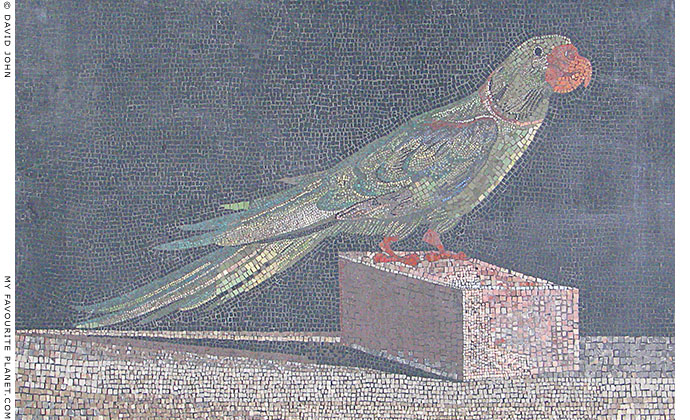
The Pergamon Parakeet (Psittacula eupatria) is a stone mosaic made around the middle of the 2nd century BC. It was named the Alexandrine parakeet after Alexander the Great because of how he sent birds from Punjab to the west. The mosaic represents the parakeets and how they became exotic pets and symbols to noble families. This mosaic was a floor panel, which was part of a much larger picture, in a small altar room in Palace V of the Pergamon Acropolis (Turkey). This mosaic wasn’t found until many years later in June of 1886 by excavators led by Richard Bohn. To get the color and intricate design in this mosaic, the Greeks used a method called opus vermiculatum. This just means that colored tesserae were used to give this parrot some life and eye-catching color. Other things such as plants and mythical figures were made in this way, not just animals. Birds were especially popular such as the dove which usually symbolized love and peace.
This was an important part of Greek culture and really showed how they made their art and techniques known to the world. Many of these mosaics are still admired, looked at today, and influence today’s art. Mosaics such as this parakeet are held in very ancient buildings. Many of these mosaics still haven’t been discovered today because they’ve been buried deep in the ground, have been destroyed, or haven’t been searched around for. The condition of the parakeet mosaic had deteriorated over time and lost many of its parts unfortunately. The remaining parts are being held in the Pergamon Museum in Germany. Finding the artists for these different mosaics can be difficult either because it was too difficult to see, there was no signature, or there were multiple people working on the same mosaic. In this parakeet mosaic, the artist isn’t completely known or agreed upon. Scholars think that the main artist was Hephaistion because of their signature on one of the corners. Other artists such as Sosos worked at Pergamon creating more art. There is a whole controversy about who actually worked on it. Maybe they even came together and worked on it together.

Mosaics were created in this period either to show off their art design and ideas, to decorate buildings such as palaces and churches, to worship higher deities, or to serve as protection from harsh weather. Some mosaics were also made to show status or honor to different families. There are still some mosaics being built today using the influence of Greek culture, but have died down recently either because of the loss of interest in the culture, the advanced technology being used to create art, or the influence of more pop culture art ideas.
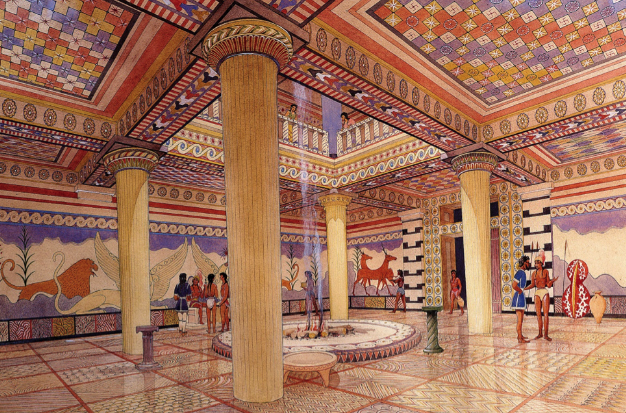
There are many researches out there trying to analyze these different mosaics and see what they can interpret from them. There are even people traveling the world still trying to look for these hidden gems. Some are even over 2,000 years old! This is a video in which it shows very old, but detailed mosaics being discovered and looked at by excavators. Some people in this video also talk about the mosaics and what they think of them.
Sources
https://artsandculture.google.com/asset/parrot-mosaic-unknown/dAHr0Sez7P1WiA?hl=en
http://www.my-favourite-planet.de/english/middle-east/turkey/pergamon/pergamon-photos-02-012.html
 MOSAIC PROJECT 23