– Jack Geibler
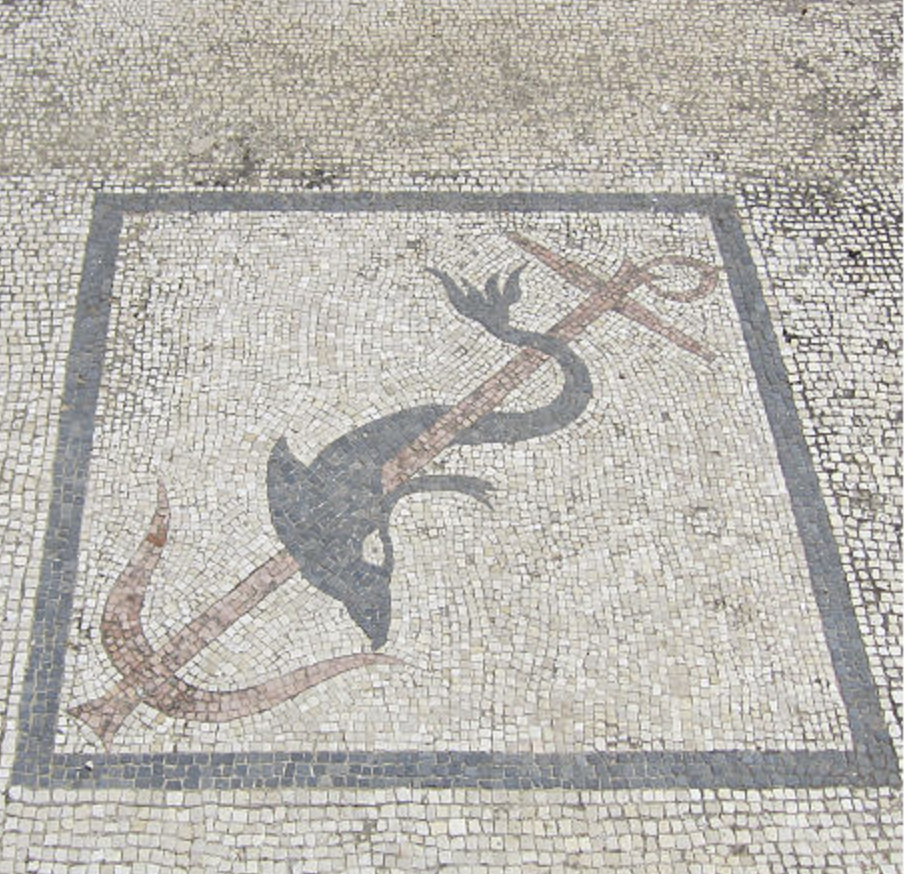
The piece of art being presented is a series of small pieces being put together in order to make a larger piece of art. This is called a mosaic and it is from Delos depicting a dolphin wrapped around a trident. This mosaic was built around 100 B.C. right between the Hellenistic period and the roman period of Greece. This brings an eclectic approach showing the identities of both cultures in the mosaic. The mosaics in Delos have some of the most concentrations of artwork for the time period.
Why Dolphin and Trident?
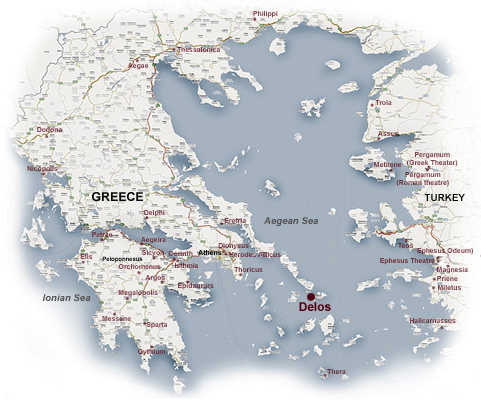
The mosaic is on the island of Delos which is a small island in the center of a large group of islands in the Aegean sea. Thus, it is a large trade port and has a lot of people crossing by. The only problem with that is the thread of other people trying to take over the not-so-powerful territory. Luckily, they had protection from Macedonia. That was important for the architecture, including the mosaics’ preservation. The mosaic depicts a Dolphin, which was a preferred subject for mosaics. The reason for this goes back to a story. A famous poet, by the name of Arion, was threatened with death because people were trying to steal his riches. As he is left to drown at sea, Apollo “the God of poetry” sends dolphins to save him. The dolphin saves him and brings him to the sanctuary of Poseidon. This story helps bring out care for dolphins in that society.
What was it made of?
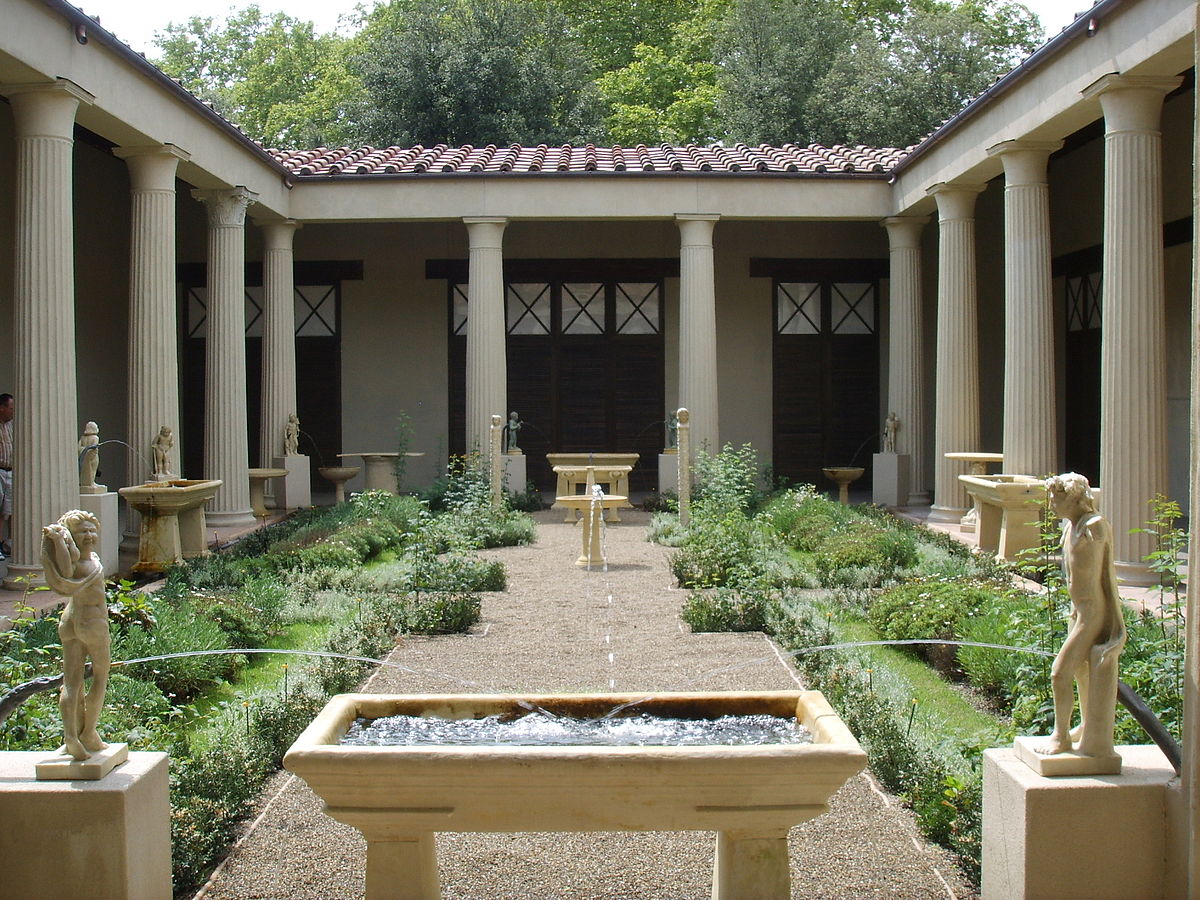
This mosaic’s purpose was solely decoration. The design is peristyle which was unusual for the area. A peristyle is a space surrounded by pillars inside a building. Peristyle is an example of Greek architecture used with the mosaic. It is hard to find any purpose for the mosaic because there is not much known about the creator. The dolphin around a trident is a part of a circle of mosaics. Asclepiades is the creator of the piece but not much is known about him. The piece stayed alive because of its relevance in history. People wanted to keep it alive so that others can learn more about Delos and Hellenistic traditions and religious beliefs. This was a strong force for its protection over the large number of years that it has been preserved.
Where is this Mosaic?
This mosaic was on a small, rocky island called, Delos. Delos is a site where various old mosaics are. Once discovering these mosaics, the Delos restoration works made sure to preserve these works as best as they could. It could stay so well preserved before because it was uninhabited since 600 AD. Delos, at the time, was a major port used by many around the Mediterranean. Now, the entire island is used as an archeological site. The House of the Dolphins mosaic was made of tesserae, which is a small square piece of stone. Tesserae was a common material used for mosaics.
Why Mosaics?
Mosaics were used a lot for decoration in this time period. That begs the question, why were they making so many Mosaics. First of all, it helps show what life was like at the time. Mosaics would depict things that were going on that can show details about the culture of a certain area. Mosaics were used on floors. This is a form of art that isn’t used very often. The new idea of putting it on the floor would make itself stand out. Secondly, it represents status and wealth. People would have mosaics in their house so when a guest would come over, they would be impressed. Everyone is big on how others see them and their outside appearance. Lastly, they tell us about ancient history. For example, a mosaic might be a picture of a certain area in which people today can observe to learn more about the time period. This brings the culture of people from so long ago, back to life.
Finally here is a video showing the house of dolphins 0:00-0:12
Works cited
https://www.merriam-webster.com/dictionary/peristyle
https://ancient-greece.org/archaeology/delos.html
https://whc.unesco.org/en/list/530/
https://www.getty.edu/news/a-brief-introduction-to-roman-mosaics/
 MOSAIC PROJECT 23