by Eric Meyer
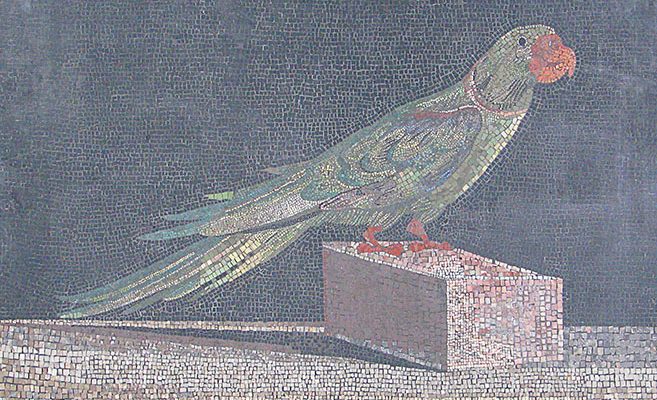
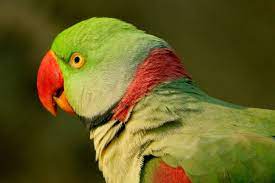
Parrot Pergamon is a Greek mosaic floor panel depicting a parrot of the Alexandrine species. This type of parrot called the Alexandrine parakeet is predominately green with a large red beak. The Alexandrine parakeet is named after Alexander the Great who exported many of these parrots from northwestern India to Europe and the Mediterranean where they became popular among the upper class and valued by people of royalty and nobility. This popularity is one of the reasons this bird was chosen to be the subject of the mosaic. Parrot Pergamon mosaic was created around 150 B.C. in Pergamon, an ancient Greek city in modern-day Turkey. This mosaic is in Palace V of the Pergamon Acropolis. Within Palace V, in a room called the altar room, is a large mosaic floor that includes Parrot Pergamon.
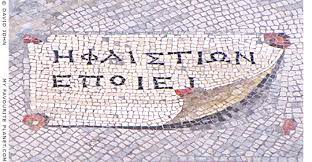
Not much is known about the artists of the mosaics that created this large mosaic floor in Pergamon Palace V. One panel of this mosaic floor was found that illustrates a piece of paper with the signature “Hephaiston”. Much of the surrounding art has been destroyed. The central panel with the signature can be found in the Pergamon Museum, in Berlin, Germany along with The Parrot Pergamon and many other mosaics from Pergamon. This museum was built between 1910 and 1930 to showcase dug-up hallenistic works of art, such as the Pergamon Altar. A virtual tour of this museum is shown in this video https://youtu.be/ncEGTAI3HUw. There is only one known reference to a mosaic artist in ancient literature by Pliny the Elder, who brings up the artist Sosos, who created his art in Pegamon.
Parrot Pergmamon is called an emblema and created using the technique called opus vermiculatum, which translated from Latin means “worm-like work”. Opus vermiculatum is a method created in Greece that uses small colored cubes of stone called tesserae to construct an image. This technique used dark-colored tesserae to contrast and highlight the main designs which often depicted using bright colors. Rows of tesserae are used as outlines and help the design look more like a picture. The artist of Parrot Pergamaon approaches the design like a painter, and attempts to make the work as realistic as possible. This mosaic is similar to a style called trompe l’oeil realism because of its use of shading in order to portray the parrot as three-dimensional. This short video outlines how opus vermiculatum was performed, https://youtu.be/u0rDj-hOViM.
Many mosaics such as Parrot Pergamon and other emblemata were made to be transported from the artist’s workshop where they were created, then to the location where they would be installed. Having the ability to create it, then transport it, made it easier for the artist to execute the opus vermiculatum technique because its difficulty to perform. The mosaics would then be handed over to other workers who would use cement and mortar to install the tile into the floor.
Works cited
http://www.my-favourite-planet.de/english/middle-east/turkey/pergamon/pergamon-photos-02-012.html
https://www.britannica.com/art/opus-vermiculatum
https://artsandculture.google.com/partner/pergamonmuseum-staatliche-museen-zu-berlin
 MOSAIC PROJECT 23