Braden Smearman
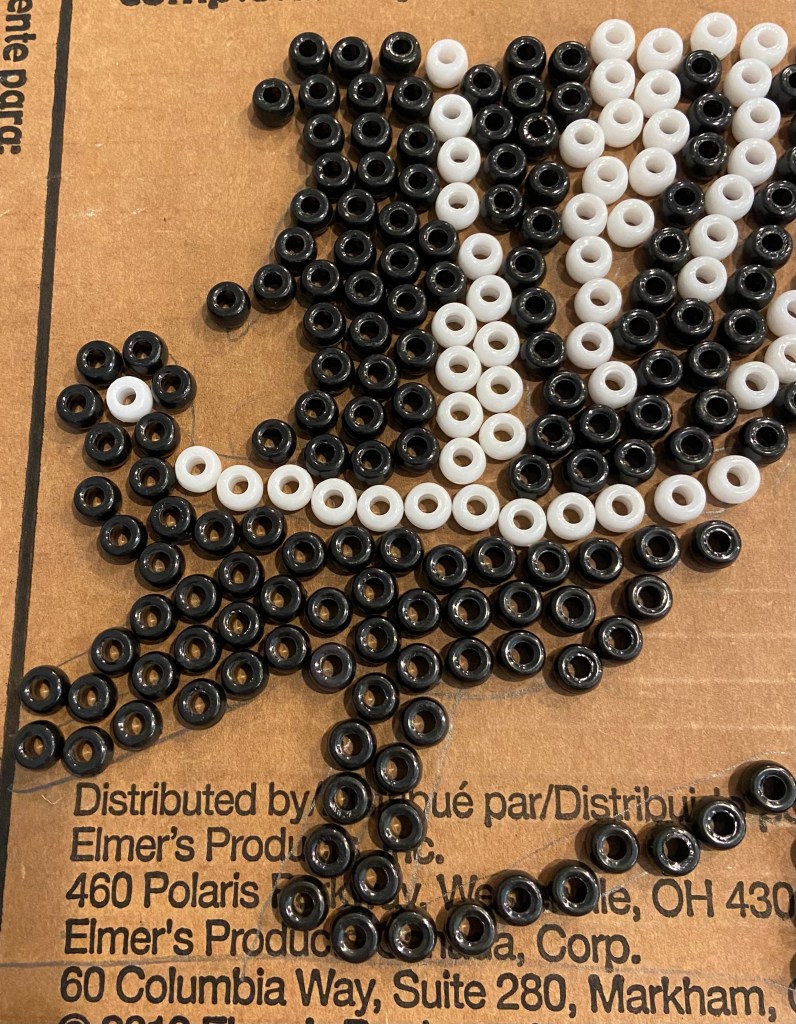
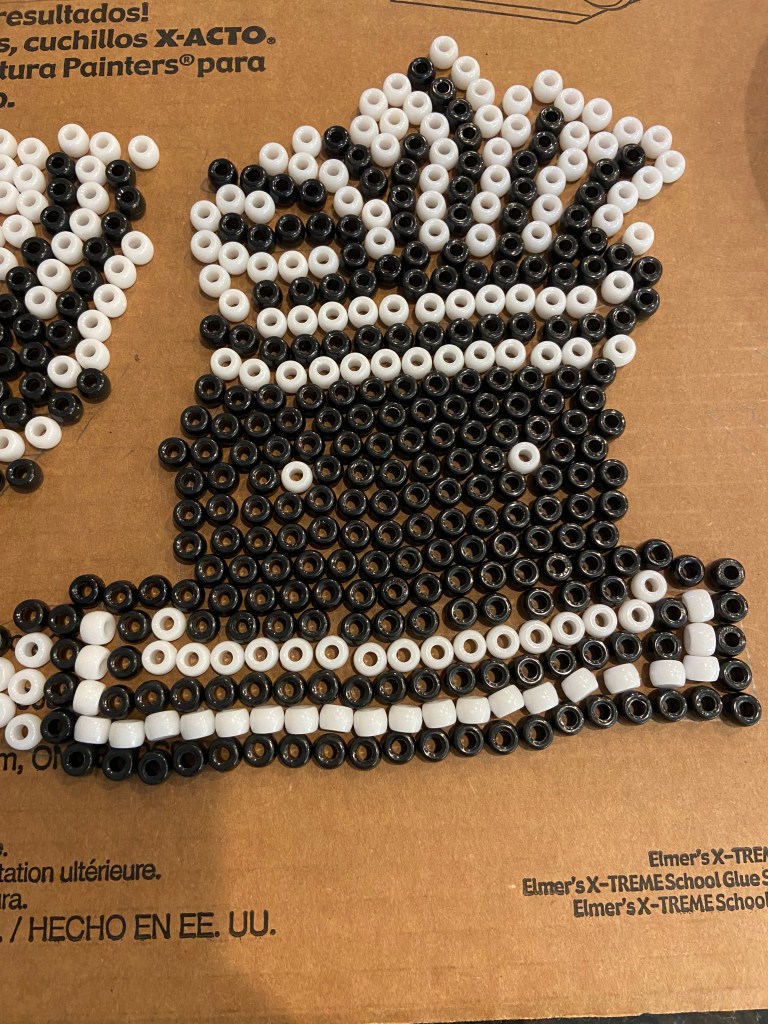
It was time to begin the recreation of an Ostia Antica mosaic. My first step was to find a piece of posterboard to construct the piece on, as I needed a flat surface. I then gathered my beads and began sorting to make it easier to grab a certain color bead. I sorted all of my white and black beads into two different bowls, which took a lot longer than expected. Once I finished sorting, I drew a blueprint for my mosaic. I depicted the outline of the actual mosaic as a basis for my creation. This took about thirty minutes, as I kept having to restart to accommodate for the size of the posterboard. I began to place the black beads in the correct spot to create the main objects in the mosaic. Since the mosaic was composed of three different images, I did one image at a time. I would place the black beads down, then place the white beads needed to create a border around the object. This helped keep the black beads in place. I repeated this step for the remaining two objects and finished the majority of the mosaic. I finished the art by placing the remainder of the white beads to fill in the background of the mosaic. While creating my mosaic, I ran into one main problem. I had to keep the beads from rolling away and keep them in place. This was difficult in parts especially, where I had to put them sideways to accommodate for size, as they would roll and bump other beads out of place. Also, when placing the white beads as the background, I would accidentally bump one bead to close to another and it would move every bead it touched. This caused some of the images to become disformed, making me fix the image all together. Although, this extended the process, I overcame the obstacle and finished the mosaic.

 MOSAIC PROJECT 23