By Vasilios Van de Verg

This is my recreation of the Alexandrine Parakeet Mosaic of Pergamon. I remade the mosaic out of overlapping strips of paper for the body of the parrot and glass and ceramic for the background. I paired these two materials in order to accentuate their properties; the paper strips are flexible and irregular, in sharp contrast to the static and periodic ceramic around them. It was my intention to use two very disparate mediums side by side, in order to display a disconnect between the parrot and the rest of the mosaic. While I was studying the original artwork, it struck me how alien the parrot seemed. Its vibrant colors and the almost organic appearance of opus vermiculatum opposed the coldness and the rigidity of the surrounding tiles. It was almost like looking at two different mosaics, which is an effect than I attempted to not only replicate but to enhance. The presence of a singular figure surrounded by a dark, overpowering background displays an air of isolation, which is further compounded by the distinct material and style of the figure.
Firstly and most forwardly, listening to the call of a parrot immerses the audience by creating another sensory connection to the main figure of the mosaic. This adds to the liveliness of the parrot and makes the contrast between it and the background all the more stark. Furthermore, it should be noted that the cries come from a lone parrot, which serves to magnify the atmosphere of solitude exhibited by the piece. When combined, the distinct visual quality of the paper portrait and its accompanying audible component create a close approximation of a parrot from the audience’s perspective. This may cause the viewer to think about the original parrot. Not the original mosaic of the parrot, but rather the parrot that was used as a reference for the original mosaic. That parrot was bright, alive, animated, colorful, and its nature was altogether foreign to dark, cold, rigid stone.
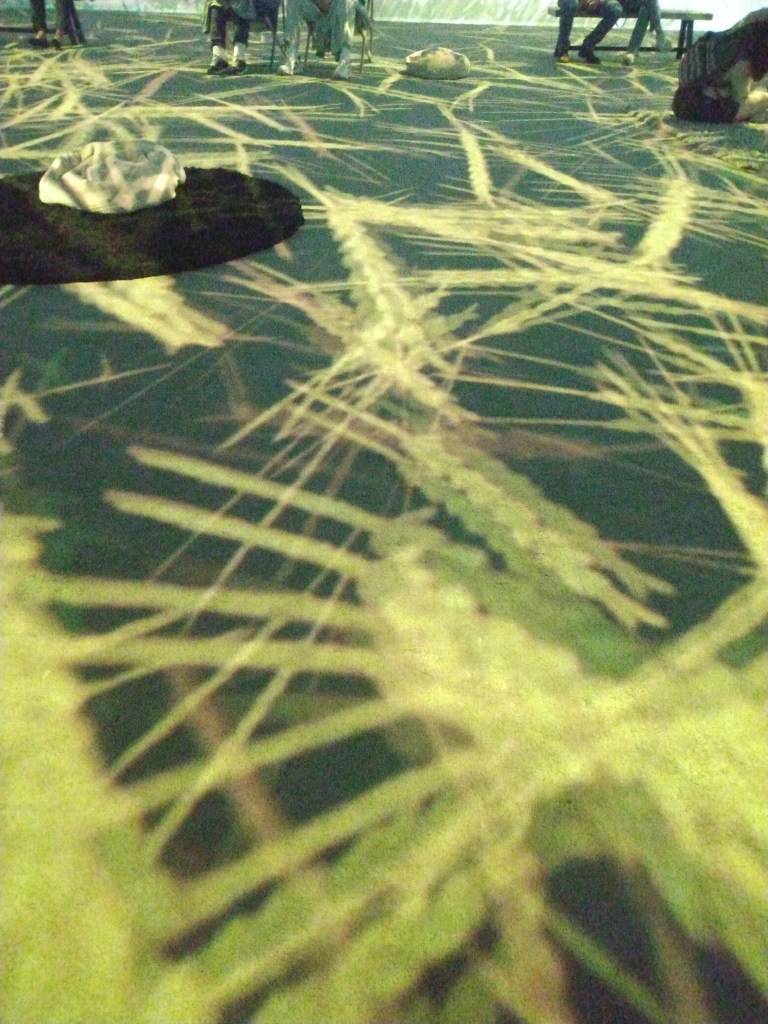
This is a photo of the floor in the Van Gogh Immersive Experience in Washington DC. It relates to my mosaic because the way that the projections of the wheat are superimposed on the dark floor is similar to the way I superimposed the parrot on the dark glass.
Working on this project has raised a few questions for me. Firstly, why do many of our artworks mimic those of antiquity? Is it possible that this tendency to mirror the past is in opposition to Gertrude Stein’s belief that art should be separate from the identity of the artist, as relying on inspiration from classical civilization inherently ties its identity it to western culture? Secondly, what does the confinement of the parrot say about our perception of beauty? While putting a radiant object in the center of a drab scene does magnify its visual qualities, is it not also true that this detracts from the objects beauty and creates an air of somberness? Are not magnificent things better when in conjunction with each other?
 MOSAIC PROJECT 23